
Welcome to Pinghu Zhanpeng Hot Melt Adhesive Web & Film Co., Ltd. Enterprise Official Website.
Hot melt bonding solution provider
+86-573-85032008


In demanding industrial and outdoor environments, the longevity and performance of adhesive tapes are paramount. Among the various synthetic options, High-Density Polyethylene (HDPE) tape has distinguished itself as a remarkably resilient material, particularly in its ability to resist degradation from chemical exposure and ultraviolet (UV) radiation. This robust nature makes HDPE tape a preferred choice for applications where other tapes might quickly fail.
The exceptional resistance of HDPE tape stems directly from the molecular structure of High-Density Polyethylene. HDPE is a polymer characterized by long, linear hydrocarbon chains with very few branches. This highly crystalline structure allows the polymer chains to pack together tightly, resulting in a dense and strong material.
Chemical Resistance: The chemical inertness of HDPE is primarily due to its non-polar nature and the strength of its carbon-hydrogen and carbon-carbon bonds. These strong covalent bonds are difficult for many chemicals to break. When exposed to a wide range of acids, bases, and many organic solvents, the tightly packed molecular structure of HDPE tape prevents these substances from penetrating or reacting with the polymer chains.
Low Permeability: The high density and crystallinity mean there are fewer free spaces or amorphous regions where chemical molecules can diffuse and attack the polymer. This low permeability is crucial in preventing swelling, dissolution, or chemical reactions that would compromise the tape's adhesive properties and structural integrity.
Inertness: Unlike polymers with more reactive functional groups, HDPE is largely unreactive. It does not readily form new compounds or undergo significant changes in its molecular structure when exposed to most common industrial chemicals, oils, and greases. This inherent inertness ensures that the adhesive bond remains strong and the backing material remains intact, even in corrosive environments.
UV Resistance: UV radiation, a component of sunlight, is notorious for causing polymer degradation through a process called photo-oxidation. This process involves the absorption of UV energy by the polymer, leading to the formation of free radicals that can initiate chain scission (breaking of polymer chains) and cross-linking, ultimately resulting in embrittlement, cracking, discoloration, and loss of mechanical properties.
While pure polyethylene is inherently susceptible to UV degradation over long periods, the UV resistance of commercial HDPE tape is significantly enhanced through the incorporation of specialized additives during manufacturing.
UV Stabilizers: The primary mechanism for UV resistance in HDPE tape involves the use of UV stabilizers. These additives work in several ways:
UV Absorbers: These compounds selectively absorb harmful UV radiation and dissipate the energy as harmless heat, preventing it from reaching and damaging the polymer chains.
Hindered Amine Light Stabilizers (HALS): HALS compounds are highly effective free radical scavengers. They intercept the free radicals formed by UV exposure before they can initiate or propagate the photo-oxidation process, thereby protecting the polymer.
Antioxidants: Often used in conjunction with UV stabilizers, antioxidants help to terminate the chain reactions initiated by residual free radicals, further extending the material's lifespan.
Carbon Black: For applications requiring maximum outdoor durability, some HDPE tapes incorporate carbon black. Beyond providing opacity and color, carbon black is an excellent UV absorber and free radical scavenger, offering superior protection against photodegradation by shielding the polymer from harmful radiation.
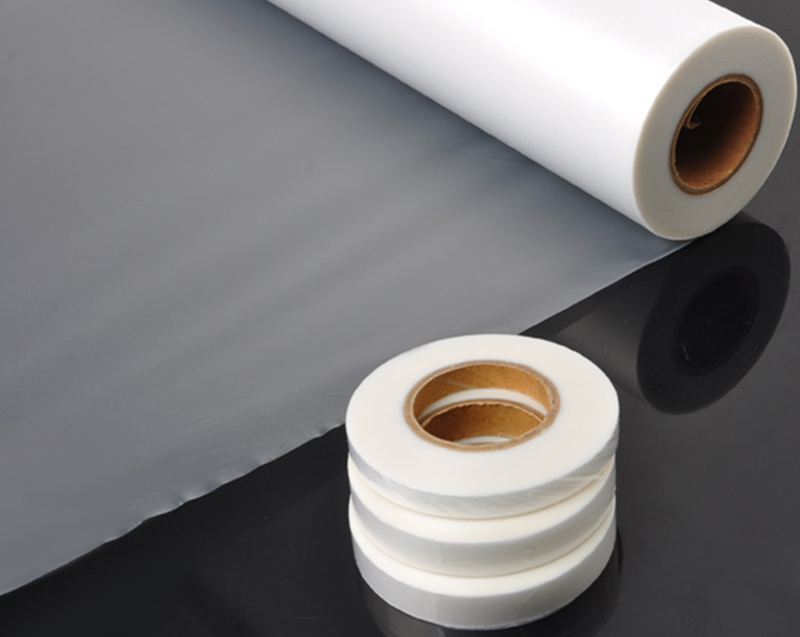
The robust chemical and UV resistance of HDPE tape makes it indispensable in a variety of challenging applications:
Outdoor Construction: Sealing membranes, joining insulation, or securing temporary structures where exposure to sunlight and harsh weather is constant.
Pipeline & Corrosion Protection: Wrapping pipes to protect against soil chemicals, moisture, and microbial attack.
Industrial Packaging: Securing heavy-duty cartons, drums, or bulk containers that might be stored outdoors or exposed to chemical spills.
Agriculture: Repairing greenhouse films or other outdoor coverings that endure continuous UV exposure.
Marine Applications: Where saltwater, humidity, and sun can quickly degrade lesser materials.
The remarkable resilience of HDPE tape against both chemical exposure and UV light is not accidental. It is a direct consequence of its inherent molecular structure, characterized by high density and strong, stable bonds, further bolstered by sophisticated additive technologies. This combination ensures that HDPE tape provides reliable, long-term performance in some of the most demanding environments, underscoring its value as a critical material in modern industry and construction.







 浙公网安备 33048202000557号