
Welcome to Pinghu Zhanpeng Hot Melt Adhesive Web & Film Co., Ltd. Enterprise Official Website.
Hot melt bonding solution provider
+86-573-85032008


Elastic non-woven fabrics, often referred to as stretch nonwovens or flexible nonwovens, are versatile materials gaining increasing traction across diverse industries due to their unique combination of elasticity, breathability, and cost-effectiveness. Unlike traditional woven or knitted fabrics, non-wovens are produced directly from fibers, making their manufacturing process distinct and highly specialized, especially when aiming for elastic properties. This article delves into the intricate steps involved in creating these advanced materials.
Content
The foundation of any elastic non-woven fabric lies in the careful selection of its raw materials. The primary component for achieving elasticity is typically elastomeric fibers. These can include:
Spandex (Lycra®): Known for its exceptional stretch and recovery properties.
Elastomeric Polypropylene (PP): Offers good elasticity and is cost-effective, often used in hygiene products.
Elastomeric Polyethylene (PE): Provides softness and flexibility.
Bicomponent Fibers: These fibers consist of two different polymers extruded together, often with one component having elastomeric properties and the other providing structural integrity or a lower melting point for bonding.
These elastomeric fibers are often blended with other conventional synthetic fibers like polypropylene, polyester, or polyethylene to achieve desired characteristics such as strength, softness, and processability. The fibers are typically supplied in bales and then opened, blended, and carded (if staple fibers are used) to form a uniform web.
Several methods can be employed to form the initial fiber web, each impacting the final fabric's properties. For stretch nonwovens, the chosen method often plays a crucial role in enabling the inherent elasticity or facilitating subsequent stretching processes.
Spunbonding: This is a widely used method for producing durable non-wovens. In spunbonding, molten polymer is extruded through fine dies to form continuous filaments. These filaments are then cooled, attenuated (stretched), and laid randomly onto a moving conveyor belt to form a web. For elastic non-wovens, specialized melt-blowing or bicomponent spunbond technologies are often utilized to incorporate elastomeric polymers effectively.
Meltblowing: This process involves extruding molten polymer through a die with high-velocity hot air, which attenuates the fibers to very fine diameters (microfibers). These microfibers are then collected on a screen. While meltblown webs are typically known for their excellent barrier properties, integrating elastomeric polymers into this process can yield highly extensible and soft flexible non-wovens.
Carding (for staple fibers): If staple elastomeric fibers are used, they are carded to align them and form a uniform web. This method is often followed by hydroentangling or thermal bonding.
Air-laying/Wet-laying: Less common for purely elastic non-wovens, but these methods can be used to create webs from shorter fibers, which might then be combined with elastomeric components in subsequent steps.
This is a critical stage where the non-woven web is consolidated and, importantly, where the elastic properties are either activated or further enhanced.
Thermal Bonding: Heat and pressure are applied to the web, melting specific areas of the fibers (especially lower melting point components in bicomponent fibers) to create bond points. For elastic non-wovens, precise control of temperature and pressure is vital to avoid over-bonding, which can restrict elasticity. Point bonding is a common technique, creating discrete bond areas that allow the unbonded regions to stretch.
Hydroentangling (Spunlacing): High-pressure water jets are directed at the web, entangling the fibers mechanically. This creates a soft, fabric-like material with good drape and can be effective for stretch nonwovens as it doesn't rely on thermal bonding which can stiffen the fabric. The entanglement itself contributes to some inherent extensibility.
Mechanical Stretching/Creping: After initial bonding (often thermal bonding), the non-woven fabric can be mechanically stretched in one or more directions. This can cause the fibers to straighten and orient, leading to enhanced elastic recovery. Creping involves compressing the fabric to create folds or wrinkles, which can also impart extensibility.
Activation: This refers to processes where a pre-existing non-woven fabric (often with latent elastic properties or a high percentage of elastomeric fibers) is subjected to heat or mechanical stress to activate and optimize its elastic recovery. This might involve stretching over heated rollers or through specific calendering processes.
Once the elastic non-woven fabric has been formed and bonded, it undergoes various finishing treatments and converting processes to meet specific product requirements.
Laminating: The elastic non-woven can be laminated with other materials (e.g., films for barrier properties, other non-wovens for strength) to create composite structures.
Coating: Applying coatings can add properties like breathability, water repellency, or softness.
Printing: For aesthetic purposes or branding.
Slitting and Winding: The finished fabric is then slit into desired widths and wound onto rolls for packaging and distribution.
The unique properties of flexible non-wovens make them ideal for a wide range of applications, including:
Hygiene Products: Diapers, adult incontinence products, feminine hygiene products (e.g., elastic waistbands, leg cuffs, ear tabs).
Medical Textiles: Surgical drapes, gowns, bandages, and wound dressings where flexibility and conformability are crucial.
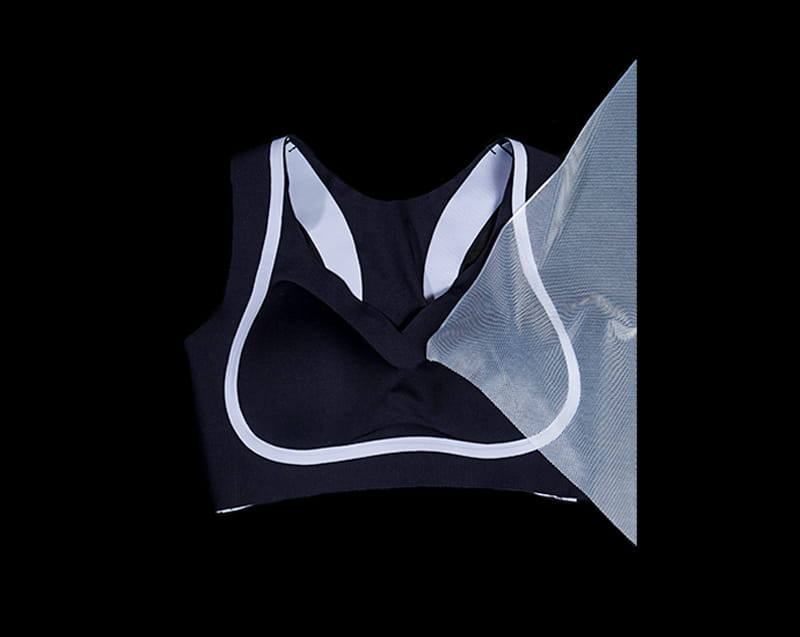
Apparel: Sportswear, intimate apparel, and specialized protective clothing.
Automotive: Interior components requiring stretch and durability.
Packaging: Flexible packaging materials.
The manufacturing of elastic non-woven fabric is a testament to advanced material science and engineering. Through precise control over fiber selection, web formation, bonding techniques, and post-processing, manufacturers are able to create highly functional and innovative stretch nonwovens that continue to expand their presence in our daily lives.






 浙公网安备 33048202000557号