
Welcome to Pinghu Zhanpeng Hot Melt Adhesive Web & Film Co., Ltd. Enterprise Official Website.
Hot melt bonding solution provider
+86-573-85032008


Content
High-Density Polyethylene (HDPE) tape has emerged as a critical material in the industrial sector due to its unique molecular structure. Unlike standard tapes, the linear polymer chains in HDPE provide a high strength-to-density ratio, making the tape exceptionally resistant to impact and physical abrasion. This durability is coupled with a low moisture absorption rate, ensuring that the adhesive bond remains intact even when submerged or exposed to high humidity. These properties make it the primary choice for infrastructure projects that require a service life exceeding 50 years.
Beyond physical toughness, HDPE tape offers superior chemical resistance. It remains stable when in contact with a wide array of solvents, acids, and alkalis, which would typically degrade PVC or rubber-based tapes. Because the backing is highly crystalline, it acts as a nearly impenetrable barrier against environmental stress cracking. This makes it an ideal solution for shielding sensitive components in chemical processing plants or coastal installations where salt spray is a constant threat.
In the construction and utility sectors, HDPE tape is frequently utilized for its waterproofing and vapor barrier capabilities. It is the industry standard for sealing joints in concrete structures, manholes, and precast box sections. The tape is often paired with a butyl rubber adhesive to provide a "cold-applied" seal that does not require heat or specialized torches, significantly reducing installation time and labor costs on-site.
Furthermore, HDPE tape plays a vital role in pipe protection. Whether it is metal or PVC piping, applying a layer of UV-stabilized HDPE tape prevents corrosion from soil chemistry in underground applications and shields against degradation from direct sunlight in outdoor settings. The following list details the most common professional use cases:
Pipe Wrap and Insulation: Protecting underground gas and water lines from corrosive soil and moisture.
Vapor Barrier Seaming: Sealing the edges of polyethylene house wraps and basement moisture barriers to ensure airtightness.
Surface Shielding: Providing a low-friction, abrasion-resistant "wear strip" on conveyor rails and industrial machinery.
Heavy-Duty Bundling: Securing heavy metal rods or piping during transport where high tensile strength is required.
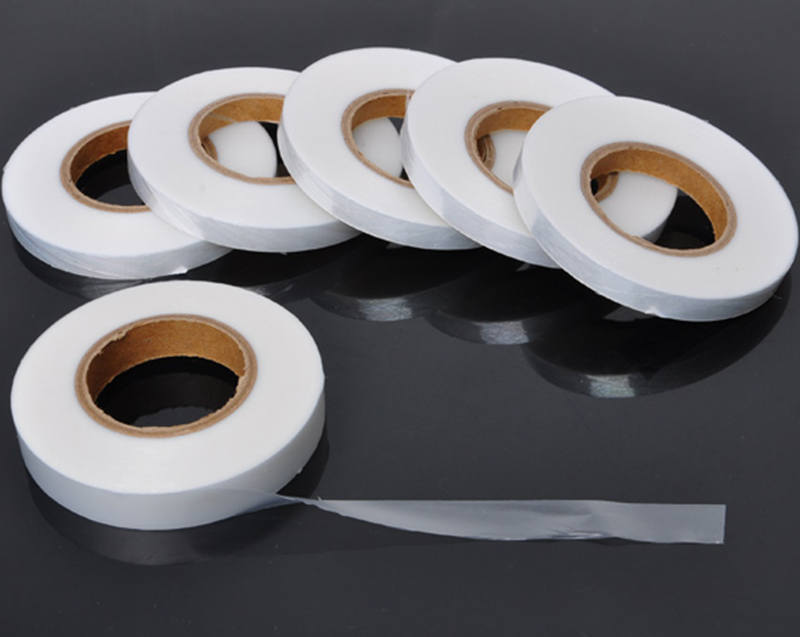
When selecting a sealing solution, engineers must compare HDPE with other common materials like LDPE (Low-Density Polyethylene) or PVC. HDPE tape generally offers higher tensile strength and better temperature resistance than its counterparts. Below is a comparison of typical performance metrics for industrial-grade HDPE tape:
| Property | HDPE Tape Metric | Industrial Benefit |
| Tensile Strength | > 30 lb/in width | Resists breaking under high tension |
| Water Vapor Transmission | < 0.2 g/100 in² / 24hr | Superior moisture and air barrier |
| Dielectric Strength | > 20 kv | Effective for electrical insulation |
| Elongation at Break | > 200% | Flexes with ground movement or vibration |
| Chemical Resistance | Excellent | Stable against acids, oils, and alkalis |
To maximize the effectiveness of HDPE tape, proper surface preparation is essential. Because HDPE is a "low surface energy" plastic, the adhesive (usually acrylic or butyl) must be applied to a clean, dry substrate. Any presence of dust, grease, or moisture can prevent the viscoelastic flow of the adhesive into the surface irregularities, which is necessary for a permanent bond.
Cleaning: Remove all loose debris, rust, and scale using a wire brush or industrial solvent.
Priming: For porous surfaces like concrete, applying a compatible primer can significantly increase the "grab" or tack of the tape.
Tension Control: When wrapping pipes, maintain a consistent tension without over-stretching the tape, which could cause "recoil" and lead to flagging or peeling over time.
Overlap Technique: Always ensure a minimum 50% overlap (spiral wrap) for pipe protection to create a double-layered barrier against the elements.
While HDPE tape is known for its wide service temperature range, the application temperature is more restrictive. Most industrial HDPE tapes should be applied between 32°F (0°C) and 110°F (43°C). Applying the tape in extreme cold may prevent the adhesive from wetting the surface properly, while extreme heat may cause the adhesive to become too fluid before it sets. Once applied and cured, however, the tape can typically withstand environmental extremes from -40°F to 170°F.







 浙公网安备 33048202000557号