
Welcome to Pinghu Zhanpeng Hot Melt Adhesive Web & Film Co., Ltd. Enterprise Official Website.
Hot melt bonding solution provider
+86-573-85032008


Hot melt films, also known as thermal adhesive films or heat-activated adhesive films, are essentially solid adhesives at room temperature. They are engineered to become viscous liquids when heated, creating a strong bond between two substrates upon cooling. The key to successful application is understanding the melting point and the optimal processing temperature for your specific product and application.
Content
It's crucial to distinguish between the melting point and the application temperature.
Melting Point: This is the temperature at which the solid film begins to transition into a liquid state. It's a critical technical specification, often measured in a lab using methods like the "Ring & Ball" test.
Application Temperature: This is the ideal temperature range at which the hot melt is applied to achieve a secure, strong bond. It is almost always higher than the melting point to ensure the film fully liquefies, flows properly, and wets the surfaces to be bonded, allowing for effective adhesion.
For example, a hot melt film might have a melting point of 80°C (176°F), but the recommended application temperature could be 120-140°C (248-284°F) to ensure a high-quality bond.
The material composition is the biggest factor determining the required temperature. Here are some of the most common types of hot melt films and their typical temperature ranges:
Low-Temperature Hot Melt Films (e.g., EVA, some TPUs): These films are ideal for heat-sensitive materials like certain plastics, foams, and delicate textiles. Their melting points can range from 70°C to 100°C (158°F to 212°F), with application temperatures typically slightly higher.
Medium-to-High Temperature Hot Melt Films (e.g., PES, PA, TPU): This is a broad category that covers a wide variety of industrial and consumer applications. These films generally have melting points from 100°C to 150°C (212°F to 302°F), and application temperatures often fall between 140°C to 180°C (284°F to 356°F). They are commonly used for bonding fabrics, leather, and wood.
High-Temperature Hot Melt Films (e.g., high-performance PA, some cross-linking PURs): Designed for demanding environments, these thermoplastic adhesive films can withstand greater heat and offer stronger bonds. Their melting points often exceed 150°C (302°F), with application temperatures reaching up to 200°C (392°F) or higher.
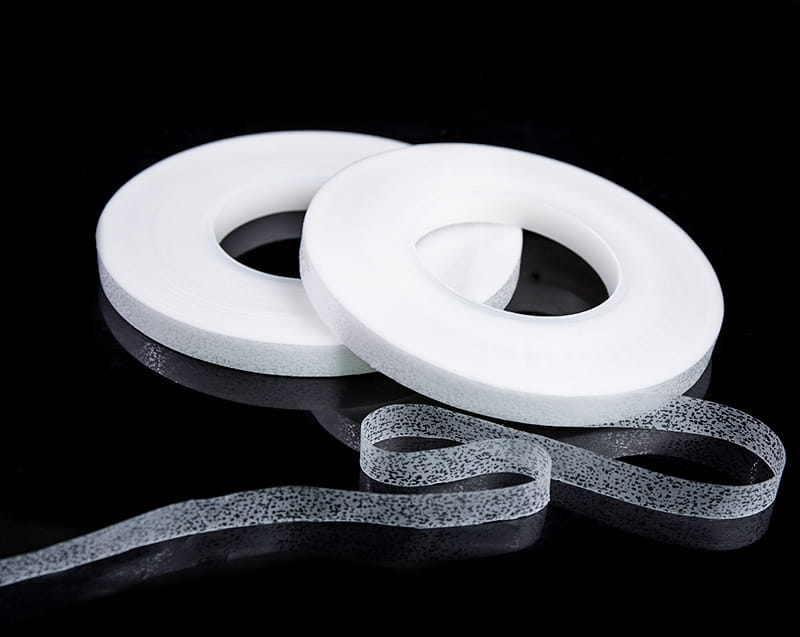
Beyond the material type, several other factors can affect the optimal temperature for your project:
Substrate Materials: The materials you are bonding are critical. Heat-sensitive substrates will require a low-melt adhesive film, while more robust materials like metal or certain plastics can handle higher temperatures.
Bonding Method: Whether you're using a continuous lamination line, a flat-bed press, or a simple hand iron, the equipment's temperature and pressure settings must be calibrated correctly for the specific fusible adhesive film being used.
Required Bond Strength: To achieve a durable and long-lasting bond, it's essential to apply the film at its recommended temperature to ensure maximum adhesion. Applying it at a temperature that is too low can result in a weak, unreliable bond.
In conclusion, before you begin any project, always consult the technical data sheet provided by the hot melt film manufacturer. This document will give you precise information on the melting point, application temperature range, and other key details to ensure a successful and durable bond.







 浙公网安备 33048202000557号